
World Bee Day – May 20th
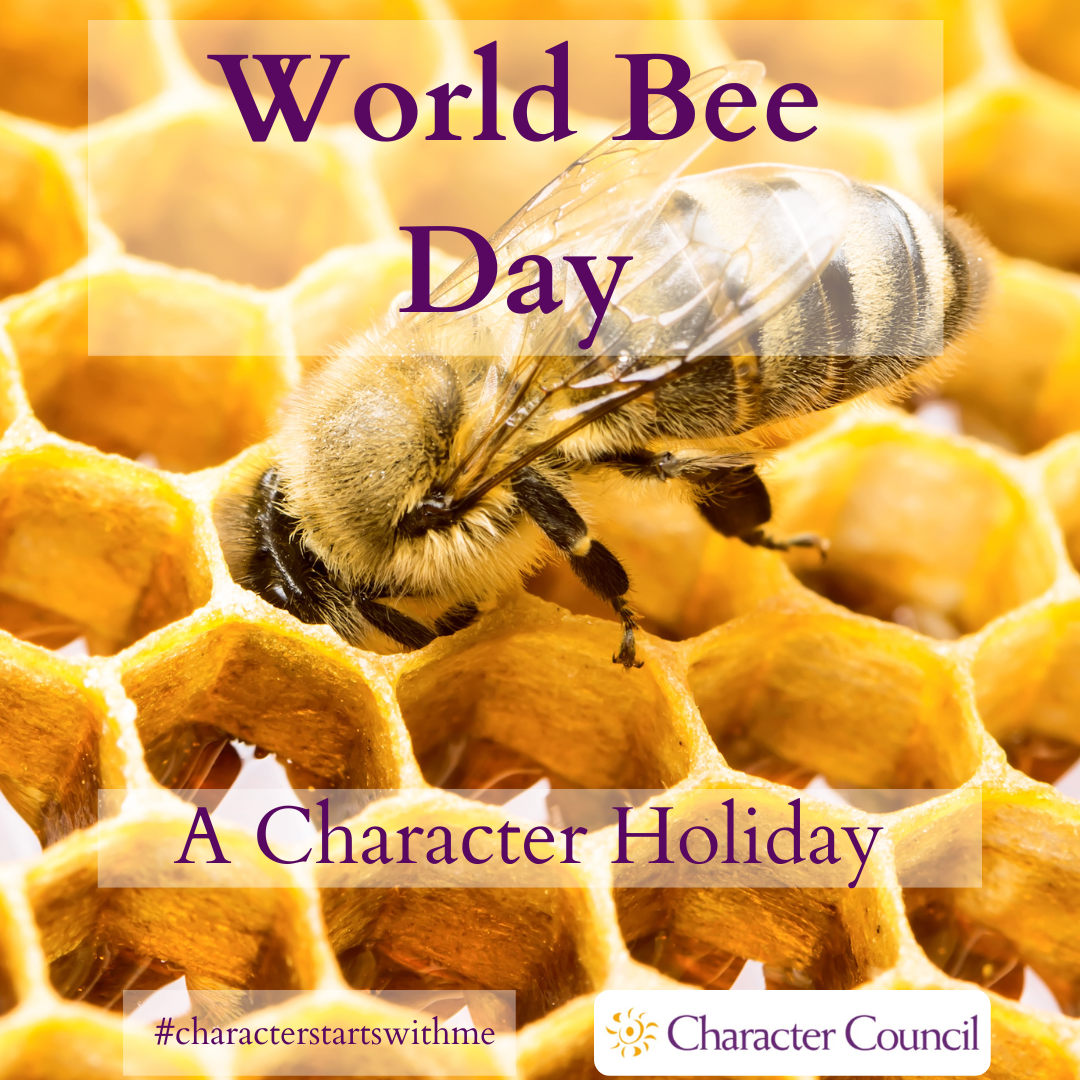
Always May 20
World Bee Day
To Bee or Not To Bee
(True or False)
You can keep a beehive in your backyard.
True – Visit Country Living’s Beekeepers for Beginners for information on starting your own hive.
Bees are important because they pollinate food crops.
True – Nearly 90% of the world’s wild flowering plant species depend, entirely, or at least in part, on animal pollination, along with more than 75% of the world’s food crops and 35% of global agricultural land.
There are plenty of Bees around.
False – Bees are under threat. Present species extinction rates are 100 to 1,000 times higher than normal due to human impacts.
I cannot do anything to help the Bee population.
False – Visit the Bee Conservancy to learn what you can do to save bees.
How This Activity Builds Responsibility
Through each True/False statement, children will learn that:
-
Our actions affect living things. When students discovered that bees are under threat, they began to understand that humans have a responsibility to care for the world around us.
-
We can make responsible choices. Learning that “I cannot do anything to help the Bee population” is false helped students see that even small actions—planting flowers, avoiding pesticides, supporting pollinators—make a difference.
-
Responsibility means being informed. Students practiced gathering facts, thinking critically, and recognizing that responsible people seek out accurate information before making decisions.
-
Responsibility extends beyond ourselves. By exploring how bees support our food systems, children saw that responsibility includes caring for our community and the environment.
You can reinforce this lesson by:
-
Talking with your child about why bees matter
-
Planting bee‑friendly flowers together
-
Noticing pollinators during walks or outdoor play
-
Celebrating small acts of care for nature
When children see that their actions—no matter how small—can help protect something as important as bees, they begin to understand responsibility in a powerful, hands‑on way.